In this guide
Separate waist size from seat and thigh room
Choose the intended waist size, then compare room through the seat and upper thigh. A waistband that closes comfortably while standing can still accompany a restrictive upper cut. Run the seated fit check with your candidates; if the waist is already right, use any pulling through the seat or thigh to guide the cut comparison.
If you have fuller thighs, compare an athletic or relaxed upper block with a straight or tapered lower leg. An athletic label is not a standardized measurement, so inspect the brand chart and try the actual pair. You may be able to keep a neat ankle opening without choosing a narrow seat and thigh.
Know which part of the waistband adjusts
A fixed waistband with belt loops gives a familiar trouser fit, but its comfort depends on the correct size and rise. A partially elastic waist may provide room at the sides or back while retaining a conventional front. A full elastic waist changes how the pants are supported and can feel different when the pockets are loaded.
An internal drawcord offers adjustment without a visible cord over the fly area. Check whether it can be reached easily and whether its knot sits where the seat belt presses. If you prefer a belt, try your intended belt during the fitting check. A different buckle will not fix a waistband that is too small.
Choose a pocket load that works with a seated trouser
Empty the rear wallet pocket before judging the pants themselves. Then decide which small items need to remain on you. A front phone can press at the hip crease; moving it to another compartment or your bag may solve that issue without changing the trouser size.
Inspect the exact layout rather than relying on a high pocket count. One accessible closure can be more useful than several compartments beneath the seat belt. Use the pocket-fit guide for the dimensional check, then compare the waist and upper cut without a heavy load disguising their fit.
Choose the fly and leg for your itinerary
If you prefer conventional trousers, confirm that the listing describes a functioning fly rather than a stitched imitation. If you prefer a jogger, check whether you are comfortable with its closure arrangement in the full outfit. These small preferences become more noticeable when several layers and a small restroom complicate access.
A tapered chino can move directly into an informal meeting or dinner outfit. A straight leg may give more room below the knee. An ankle cuff controls excess hem fabric but also creates a contact point around the lower leg. Choose based on the rest of your trip rather than assuming any one silhouette is the universal airport uniform.
Narrow the men’s shortlist with cut, waist and fly information
Compare these details in the selected size, not across two random sample sizes in a product carousel. Athletic, relaxed and slim are brand descriptions, so a chart or measured garment reference is more useful than assuming an exact amount of room from the name.
When two candidates both fit, use your preferred closure and arrival outfit to decide. A conventional fly may suit your routine; a drawcord may give adjustment you prefer. Neither needs to be described as best for every man. Keep any required event outfit separate if the flight pair cannot reasonably do that job.
Compare men’s travel pants with your preferred cut, waist adjustment and fly already decided.
| What you need | Compare on each candidate | Decision this resolves |
|---|---|---|
| More thigh room at a comfortable waist | Seat/thigh cut in the intended waist size | Whether another cut is preferable to a larger waistband |
| Adjustment during seated travel | Fixed, partial-elastic or full-elastic waist and any cord | How much adjustment is actually usable |
| A conventional fly | The exact closure, not a decorative front seam | Whether dressing and restroom handling suit your preference |
| A flight-to-arrival outfit | Plain or cuffed hem, leg line and actual shoes | Whether the same pair works after landing |
Models relevant to this guide
We may earn a commission from purchases through links on this page, at no extra cost to you. How our links work.
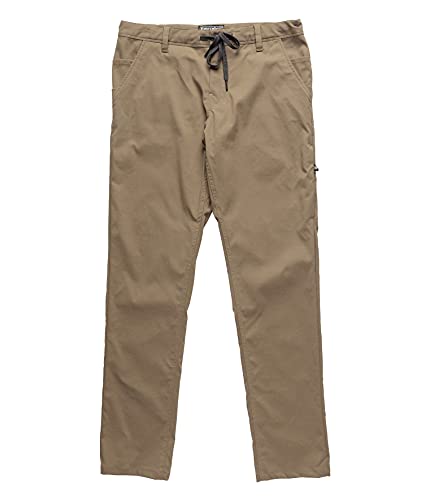
686 Everywhere Slim Fit Ten-Pocket Pants
Choose this comparison starting point when you prefer a slimmer trouser and want to investigate how the ten-pocket layout fits the items you actually carry.

Dockers Men’s Slim Fit Signature Khaki Lux Cotton Stretch Pants
Consider Signature Khaki when you prefer a slimmer trouser and want to investigate a cotton-labeled stretch option alongside Dockers’ other named chino and workday families.
Questions before you choose
Are men’s chinos comfortable for long flights?
They can be when the seat, thigh and waistband fit comfortably while sitting. Check the specific chino rather than relying on the name, and compare fixed, partially elastic and drawcord waist designs.
Are slim-fit pants a bad choice for a flight?
A slim silhouette is not automatically a problem. Reject a pair if it pulls across the seat, presses at the waist or restricts your preferred sitting position; compare a roomier upper cut if those are recurring problems.
How many pockets do flight pants need?
There is no required number. One comfortable pocket for the items you actually use can be more useful than numerous pockets that press into you while seated.