In this guide
Choose your arrival requirement first
If the first stop after landing is your room, you can prioritize your preferred seated fit and change later. If you are going directly to work or an event, start with the required arrival outfit. Do not buy a separate airport style unless it serves a purpose beyond the hours in transit.
Before comparing models, use the seated fit check to eliminate waist, seat or thigh pressure. That guide covers the fitting procedure. Here, use the result to choose among three practical flight strategies.
For a journey spent mainly in a car or train, use the road and rail guide for pocket access, stop planning and movement between seats.
| Journey | Start with | Main compromise to resolve |
|---|---|---|
| Flight, then hotel check-in | The comfortable cut you enjoy wearing | Where the travel pair fits into the rest of your wardrobe |
| Flight, then work or a booked event | The arrival outfit and its actual clothing requirements | Whether it remains comfortable seated or needs an accessible change |
| Cool cabin, warm arrival | Arrival-suitable trousers plus removable upper layers | Where those layers will go after landing |
Keep frequent-use items accessible without overloading the pants
Think through what you will use during the flight: perhaps a phone, earbud case and glasses. A document needed at a counter may not need to stay in a pants pocket throughout the journey. Assign each item a place before you settle into the seat so you do not keep moving it between pockets, bags and the seat area.
For items carried in trousers, a closed pocket can help contain the load but is not a theft guarantee. Check its placement under the seat belt and avoid hard objects beneath you. The pocket-fit guide covers usable dimensions and loaded comfort; a personal bag can hold anything the pants do not carry well.
If a closed pocket is part of your carry plan, compare travel pants with zipper pockets and check their location while seated.
Choose the leg shape for the whole journey
A jogger keeps its hem close to the ankle; a straight trouser has a plain opening; a wide leg leaves more space around the calf. Choose the shape you prefer, then check whether its length works with the shoes you will actually wear through the airport. You should not need to hold up the hem to manage stairs or a small restroom.
Keep the upper and lower fit decisions separate. A wide hem does not establish room through the hips, and a slim ankle does not require a tight thigh. Our women’s flight guide focuses on waist-to-hip fit, rise and length options; the men’s flight guide focuses on upper cuts, waistband construction and fly preferences.
If waist fastening is your deciding detail, compare pull-on travel pants before narrowing the leg shape.
Decide how to handle temperature changes
Build an outfit you can adjust without changing your pants in the cabin. A removable upper layer is easier to manage than choosing heavily insulated trousers for a flight to a warm destination. If you usually feel cold, test your intended socks and a light lower layer with the pants before packing them.
Do not treat a fiber name as a complete comfort specification. A dense synthetic trouser and a thin synthetic trouser can feel quite different. REI identifies breathability and easy care as useful travel-clothing qualities; the actual garment still needs to suit your preferences. Read REI’s travel-clothing guidance.
Plan a change only when you can make it
If your chosen arrival outfit cannot also serve the flight, pack the complete change where you can reach it. Include any belt, underwear or shoes it requires. A spare pair of trousers is not a complete solution when its supporting outfit is in a different suitcase.
Identify a realistic place and enough time to change. A short connection or immediate transfer may leave fewer options than a long layover with suitable facilities. When no change is practical, return to the shortlist and choose the best compromise for that actual sequence. Use the cold-flight, hot-arrival guide when temperature transitions are the main difficulty.
Models relevant to this guide
We may earn a commission from purchases through links on this page, at no extra cost to you. How our links work.
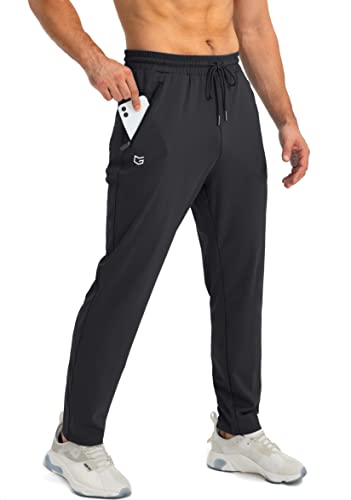
G Gradual Tapered Sweatpants with Zipper Pockets
Choose this style direction when you want an athletic travel outfit and value zipped storage more than a trouser-like appearance at your destination.

BALEAF Women’s High Waist Five-Zip-Pocket Hiking Joggers
Shortlist this when a high-waisted jogger is the shape you prefer and having five explicitly listed zipper pockets is useful for your travel routine.
Questions before you choose
What are the best pants to wear on a long flight?
Start with pants that pass a seated fit check, leave room around your hips and thighs, and provide a reachable pocket without bulky contents pressing against you. Choose the leg shape around your own comfort and arrival plans.
What is the best clothing to wear on a long haul flight?
An outfit with comfortable seated fit, manageable hems, familiar shoes and an upper layer you can remove is a practical starting point. Coordinate the pants with the temperature and activities at your destination.
What are the best pants for traveling on a plane?
A relaxed trouser, stretch chino, pull-on or jogger can work. The useful distinction is how the individual garment fits while sitting, rather than whether it is marketed specifically for flying.