In this guide
Locate the waistband you find comfortable
Put on a pair you like and note where its waistband rests when you stand naturally. Then sit, reach toward a shoe and stand again without tugging the waist back into place. If it stays comfortable, that pair is a more useful reference than a general rule about your height.
Try the exercise with the top you expect to wear. A tucked shirt changes the amount of fabric inside the band; a cropped top changes how much coverage you prefer. Neither creates a universal right rise, but both affect whether a particular pair works in your travel wardrobe.
Compare front and back rise together
Garment rise generally refers to the seam distance from the crotch area to the top of the waistband, with front and back measured separately. Brands may use different measurement points or include the waistband differently, so compare numbers only when the methods match.
Lay a comfortable reference pair flat and record its front and back rise using the product chart's method when one is supplied. Do not stretch the cloth to reach a preferred number. A matching front rise alone does not guarantee a matching seat shape, because the back and the complete pattern also influence fit.
Use the same tape path and waistband inclusion as the chart. UNIQLO distinguishes finished-garment measurements from body sizes; do not compare a curved trouser seam directly with a vertical measurement on your body.
Let seated symptoms guide the next change
Use a chair rather than judging only from a standing mirror. Keep the waistband at its intended position and notice what changes when your hips and knees bend.
| What happens | What to investigate next |
|---|---|
| Band presses uncomfortably into your abdomen | Waist size, band construction and where the rise places it |
| Back waistband drops more than you want | Back rise, seat room and the overall cut |
| Crotch hangs lower than you prefer | Rise and size rather than inseam alone |
| You pull pants up repeatedly | Waist security and whether the pattern suits your body |
| Waist fits but the seat pulls | Seat room and cut, not just the rise label |
Change the rise without changing everything else
When possible, try styles with similar fabric and leg shape. Comparing a rigid low-rise jean with a loose high-rise knit changes several things at once, making it hard to tell what you actually prefer. You may like the softness or thigh room more than the waistband height.
If both rises cause pulling through the seat, compare hip room or another cut. If the band slips only after loading a pocket, check its support. These symptoms do not isolate rise on their own; the seated fit check helps separate them.
Once the waist sits where you want it, choose the inseam. Pulling trousers lower to gain leg length, or higher to clear the floor, changes the fit you just selected. For a higher waistband, the high-rise collection is a starting point; compare each model’s measurements.
Models relevant to this guide
We may earn a commission from purchases through links on this page, at no extra cost to you. How our links work.

G4Free Women’s Petite High Waist Pull-On Ankle Sweatpants
Consider this family when you want a pull-on, high-waisted travel option and prefer a cropped wide leg to a jogger cuff or full-length trouser.
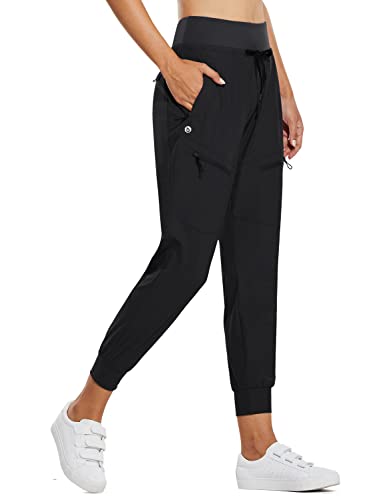
BALEAF Women’s High Waist Five-Zip-Pocket Hiking Joggers
Shortlist this when a high-waisted jogger is the shape you prefer and having five explicitly listed zipper pockets is useful for your travel routine.
Questions before you choose
Does rise change inseam?
They are separate garment measurements, but how the rise fits can change where the trouser leg hangs on your body. Check both before ordering.