In this guide
Construction and fiber answer different questions
CottonWorks explains woven construction and knitted loops. Wovens interlace yarns; knits connect loops. Those structures help explain why many knits flex readily and many woven trousers feel more structured. They do not divide all pants into rigid and soft categories: stretch wovens and substantial knits complicate that shortcut.
Cotton, wool, nylon and polyester describe fibers. Woven and knit describe how yarn becomes cloth. You can therefore compare two polyester pants with very different drape, or two cotton pants that feel unlike each other. Record both the composition and construction when a listing supplies them.
Pick the look you want with pockets in use
An empty pair on a hanger can disguise how it will behave during a trip. Put your normal phone in the intended pocket during a permitted try-on. A softly draping pant may show the phone's outline or pull toward the loaded side. A more structured pant may hold its shape better, but the pocket can still be too tight or poorly placed.
Look at the front, side and back rather than checking only a mirror straight ahead. If you would prefer to carry valuables in a bag, pocket support becomes less important. If you rely on pants pockets all day, make that a deciding test. Neither construction guarantees a good result.
Match structure to the situation
Use the table to identify a starting point, then judge the actual garment. The terms alone do not establish dress-code suitability.
If you prefer a casual cuffed shape, compare travel joggers and verify each model’s fabric construction separately.
| You want | Start by examining | Check before choosing |
|---|---|---|
| A defined chino or trouser appearance | Woven travel pants | Seat room, sheen and pocket openings |
| A soft silhouette for relaxed journeys | Knit travel pants | Opacity, knee recovery and waistband support |
| One pair for meetings and transit | Structured knit or stretch woven styles | Appearance after sitting and compatibility with your shoes |
| Loose movement without a lounge look | Roomier woven cuts | Drape and hem width |
| Minimal luggage bulk | Either construction in a suitable weight | Actual folded volume rather than the word lightweight |
Check the shape after sitting
Sit normally, stand, and let the fabric settle. Check whether the knees and seat keep a shape you dislike. This is a practical appearance check, not a durability test. Do not pull the fabric aggressively or assume that one fitting predicts its whole service life.
Try the pants with the underwear you plan to wear. A close-draping fabric may reveal seams that a different construction conceals. Check under ordinary indoor light and near daylight, because the same pair can appear different as lighting changes. Choose a larger or different cut if the cloth becomes noticeably strained during movement.
For a close choice, decide which behavior you prefer: a defined trouser outline or fabric that drapes closely with movement. For care, follow the exact garment label; knit and woven do not identify a washing or drying method.
Models relevant to this guide
We may earn a commission from purchases through links on this page, at no extra cost to you. How our links work.
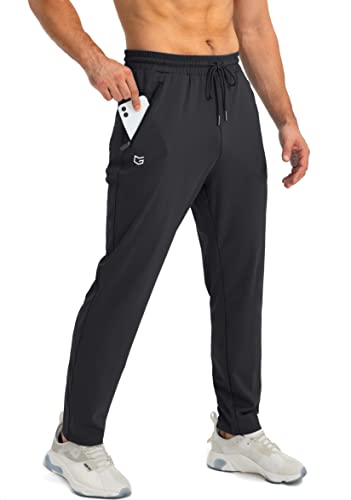
G Gradual Tapered Sweatpants with Zipper Pockets
Choose this style direction when you want an athletic travel outfit and value zipped storage more than a trouser-like appearance at your destination.

Ewedoos Women’s Wide Leg Dress Work Pants
Start here when your trip includes business-casual settings and a wide-leg trouser fits your wardrobe better than an explicitly athletic or cargo-style pant.
Questions before you choose
Are all joggers knit?
No. Jogger describes a style, often with a tapered leg or gathered cuff. Check the fabric description to learn whether a particular pair is knit or woven.
Are woven pants uncomfortable for flying?
Not necessarily. A suitable cut, waistband and any relevant stretch can make woven pants comfortable while seated.
Does knit mean the pants will stretch out?
No. Recovery varies between fabrics and garments. Inspect the actual pair after normal movement rather than assuming every knit behaves alike.